The Li-MnO2 Pouch Cell: How the CP601420 Ultra-Thin 3V Battery Powers IoT, Outdoor Asset Tracking and LoRa Tags
The Li-MnO2 Pouch Cell: How the CP601420 Ultra-Thin 3V Battery Powers IoT, Outdoor Asset Tracking and LoRa Tags
Introduction
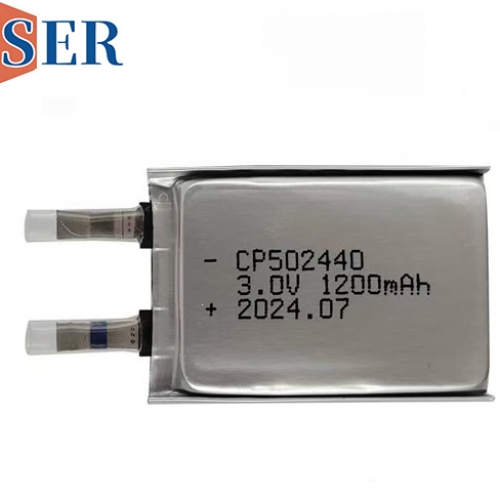
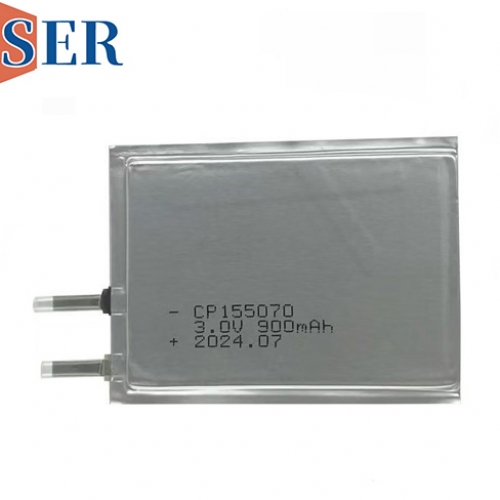
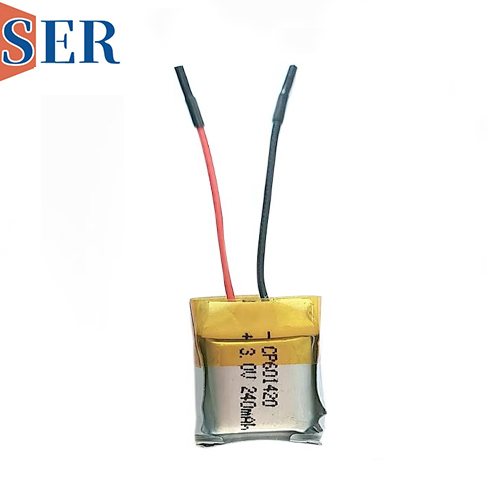
The Internet of Things has rewritten the rules of product design. Every new connected device must balance size, weight, cost and runtime, and in this battle the battery is no longer an afterthought — it is often the component that defines the entire product. For a generation of thin, sealed, long-life devices, the Li-MnO2 Pouch Cell has become a reference solution, and one product that captures this trend perfectly is the CP601420 — a LiMnO2 battery in a soft, ultra-thin pouch format that delivers a stable 3.0V and 240mAh from a body barely two millimeters thick.
The CP601420 is a primary (non-rechargeable) lithium manganese dioxide cell with pre-attached wire leads, engineered for OEMs that need a dependable, space-saving power source for devices that must operate for years with zero maintenance. Typical deployments include IoT sensor nodes, outdoor asset tracking equipment, LoRa tags, GPS trackers and wireless beacons — applications where replacing a battery is expensive, difficult or simply impossible.
This article explains the chemistry behind Li-MnO2, the engineering advantages of the ultra-thin pouch format, the complete specification of the CP601420, its performance characteristics, its key applications, and how it compares with alternatives such as lithium coin cells and Li-SOCl2 cylindrical batteries. Whether you are an engineer selecting a cell for a new design or a procurement professional evaluating suppliers, you will finish with a clear picture of why the CP601420 ultra thin battery deserves a place in your next product.
What Is a LiMnO2 Battery? Understanding the Chemistry
A LiMnO2 battery is a primary lithium cell whose positive electrode (cathode) is manganese dioxide (MnO₂) and whose negative electrode (anode) is metallic lithium. The chemistry is often written as Li-MnO2 and belongs to the broader family of solid-cathode lithium primary batteries.
The cell reaction delivers a nominal voltage of 3.0V, which is significantly higher than the 1.5V offered by alkaline or zinc-carbon cells and higher still than the 3.7V nominal of rechargeable Li-ion if you consider usable energy per unit of volume. In practice, a Li-MnO2 cell operates across a discharge plateau of roughly 2.8V to 3.0V for most of its life, with a recommended end-of-discharge cut-off around 2.0V.
Several properties make Li-MnO2 the chemistry of choice for compact, long-life devices:
High energy density. Cell-level gravimetric energy density typically reaches 250–280 Wh/kg, and the volumetric figure is among the best in the primary battery family, which is exactly what an ultra-thin format needs.
Flat discharge voltage. The voltage remains remarkably stable through most of the discharge, so microcontrollers, radio modules and sensors see a consistent supply rail and rarely need complex DC-DC conditioning.
Long shelf life. High-quality Li-MnO2 cells exhibit self-discharge of less than 1–2% per year at room temperature, supporting rated shelf lives of up to ten years.
Good pulse capability. Unlike some lithium chemistries, Li-MnO2 handles moderate pulse currents comfortably — important for devices that wake up, transmit a LoRa packet, and sleep again.
Excellent safety profile. Manganese dioxide is thermally and chemically stable, and Li-MnO2 cells have a strong safety record when handled within their specification. They contain no water-based electrolyte and are hermetically sealed.
One critical point must be stated clearly: Li-MnO2 is a primary battery. It is non-rechargeable by design, and attempting to charge it is both ineffective and dangerous. The word "primary" is not a limitation — it is a deliberate engineering trade-off. Because the cell does not need to survive thousands of charge cycles, manufacturers can pack more active material and less dead weight into the same footprint, which is why a primary ultra thin battery can outlast a rechargeable cell many times its size in always-on IoT duty.
Why the Ultra-Thin Pouch Format Matters
The traditional face of the LiMnO2 battery is the CR coin cell — a rigid, stamped metal disc. Coin cells are inexpensive and reliable, but their geometry is fixed, and they become impractical below a certain thickness. The pouch (soft-pack) format removes that constraint completely.
A Li-MnO2 pouch cell is built with laminated foil packaging rather than a metal can. The active electrodes are stacked or wound inside a soft aluminum-plastic film that is heat-sealed around the edges, with the terminals brought out as flat tabs or flexible wire leads. This construction gives designers three decisive advantages:
True thinness. Pouch cells can be manufactured at 2.0mm thickness and below, something a coin cell cannot achieve at useful capacity. For a smart card, a LoRa tag, a wearable tracker or a thin sensor label, every tenth of a millimeter of space is precious — and the CP601420 exploits that space better than almost any alternative.
Shape freedom. Because the foil conforms to the internal electrode stack, the cell can be rectangular, L-shaped or contoured to fit inside the device envelope. The external housing can shrink around the battery instead of the battery dictating the housing.
Weight and integration. With no metal can, the cell is lighter, and because terminals can be pre-fitted wire leads, the OEM avoids separate connectors, springs and PCB footprints. The battery becomes a solderable, plug-and-play component rather than a mechanical assembly challenge.
For outdoor asset tracking and IoT devices that are sealed for years, the soft pouch also offers better handling of mechanical stress. The foil flexes slightly where a rigid can would crack, and the hermetic sealing keeps moisture out — a decisive advantage in outdoor environments.
CP601420: Technical Profile of the Ultra-Thin Pouch Cell
The product code CP601420 follows the naming convention used by lithium battery manufacturers: "CP" indicates a lithium manganese dioxide pouch cell, and the digits encode the physical dimensions — 60.0mm in length, 14.0mm in width, and 2.0mm in thickness. This makes the CP601420 a long, slender, credit-card-thin power source that fits naturally into flat device housings.
Chemistry | Li-MnO2 (lithium manganese dioxide), primary |
Nominal voltage | 3.0V |
Nominal capacity | 240mAh |
Dimensions (L × W × T) | 60.0 × 14.0 × 2.0 mm |
Format | Soft pouch / ultra-thin laminated cell |
Terminal type | Standard wire leads (red positive, black negative), length and connector customizable |
Discharge type | Non-rechargeable, primary |
Construction | Hermetically sealed aluminum-plastic film |
Typical weight | A few grams, depending on lead and connector configuration |
The 240mAh capacity is remarkable when placed in context. A CR2032 coin cell — the most common battery in small electronics — is 3.2mm thick, 20mm in diameter and offers roughly 210–230mAh. The CP601420 matches that capacity while taking up a fraction of the height and adding the convenience of wire leads. For devices that are 2mm thin, it is effectively the highest-capacity option available in this class.
Because the cell is delivered with wire leads as standard, integration cost is low: the OEM simply routes the two wires to its PCB, or specifies a connector (for example, a JST-style or Molex connector) at the factory. No spring contacts, no battery holders, no reflow soldering of the cell body.
Performance Characteristics of the CP601420
Discharge behavior. Li-MnO2 cells deliver a characteristically flat discharge curve. The CP601420 maintains approximately 3.0V across the majority of its service life before a relatively rapid fall-off near the end. This predictable behavior lets firmware designers set accurate low-battery thresholds and lets system architects size the cell with confidence.
Pulse and continuous discharge. The cell comfortably supports the bursty current profiles of IoT radios. A LoRaWAN node, for example, may draw only a few microamps in sleep mode, spike to tens of milliamps during a transmission, and return to sleep — a pattern Li-MnO2 handles gracefully. For continuous or high-rate loads, the application should be validated against the cell's maximum continuous discharge rating; where higher current is required, parallel cells or a different chemistry may be appropriate.
Operating temperature. Standard Li-MnO2 cells operate over a range of roughly -20°C to +60°C, and selected grades extend this window. Because outdoor asset tracking devices frequently sit in vehicles, shipping containers or open fields, temperature resilience is one of the selection criteria that matters most — the CP601420 family is engineered for this duty.
Shelf life and self-discharge. Thanks to the stable MnO₂ cathode and hermetic sealing, the CP601420 exhibits very low self-discharge, supporting multi-year storage before deployment and multi-year operation in the field. OEMs stocking spare cells or shipping products that may sit in a warehouse for months will appreciate this stability.
Construction quality. Pouch cells are only as good as their sealing process. Quality manufacturers control the heat-seal parameters, foil quality and electrolyte filling carefully, because any microscopic leak shortens life and corrodes contacts. When sourcing a CP601420 Li-MnO2 pouch cell, the manufacturer's process discipline and test standards are as important as the datasheet numbers.
Key Applications: IoT, LoRa Tags and Outdoor Asset Tracking
The CP601420 was designed for a specific class of product: thin, sealed, battery-operated devices that must run for years. Its application profile is broad:
IoT sensor nodes. Wireless temperature, humidity, vibration and air-quality sensors are often deployed indoors and outdoors with no access to power. The 3.0V rail and long shelf life of the CP601420 let these nodes operate for their entire intended service life without a battery visit.
Outdoor asset tracking. Containers, pallets, trailers, rental equipment and industrial machines are tracked over months and years. The ultra-thin profile of the CP601420 lets trackers be embedded inside housings, under labels or between layers of packaging, where a coin cell or cylindrical cell would not fit. The wire-lead configuration simplifies assembly in these constrained enclosures.
LoRa tags and LoRaWAN endpoints. LoRa technology is synonymous with long-range, low-power, battery-friendly communication. A typical LoRa tag wakes briefly, transmits, and sleeps — precisely the duty cycle a LiMnO2 battery handles best. The CP601420's stable 3.0V output keeps the radio module inside its specification throughout the battery's life, avoiding brownouts during transmission.
GPS/GNSS trackers and telematics. Vehicle and personal trackers need a dependable primary source that tolerates temperature swings and intermittent high pulses during satellite acquisition. The CP601420 provides a thin, robust power source for such designs, either alone or in parallel configurations for extended runtime.
Cold-chain and environmental monitoring. Temperature loggers shipped with pharmaceuticals, food and sensitive cargo are typically single-use and sealed. Their batteries must be reliable at cold temperatures and must not leak. The sealed pouch construction of the CP601420 fits this duty well.
Beacons and wireless sensors. BLE beacons, motion detectors, smart locks and access tags all benefit from the combination of 3.0V output, 240mAh capacity and a 2mm footprint.
Memory backup and safety devices. The stable voltage and long life also suit real-time clock and SRAM backup in industrial electronics, plus emergency and safety devices where guaranteed power over years is a requirement.
In every one of these applications, the argument for the CP601420 reduces to the same three words: ultra thin battery. When the device envelope is 2.5mm or thinner, no cylindrical or coin cell can deliver 240mAh; the CP601420 can.
How the CP601420 Compares: Coin Cells and Li-SOCl2
To appreciate where the CP601420 fits, it helps to compare it with the two most common alternatives.
Nominal voltage | 3.0V | 3.0V | 3.6V |
Typical capacity | 240mAh | ~210–230mAh | 1000mAh+ (size dependent) |
Thickness / size | 2.0mm, flat & rectangular | 3.2mm, round disc | Ø14–Ø26mm cylinder |
Shape flexibility | High (pouch) | None (fixed disc) | None (fixed cylinder) |
Terminals | Wire leads (standard) | Holder / spring contacts | Tabs or leads |
Self-discharge | Very low | Very low | Extremely low |
Pulse capability | Good | Moderate | Lower at start (voltage delay) |
Typical use | IoT, tracking, wearables | Consumer electronics, RTC backup | Utility meters, industrial long-life |
Vs. the CR2032 coin cell. The coin cell is cheaper and familiar, but it is 3.2mm thick, needs a holder or spring contacts, and cannot match the CP601420's thinness. Where device thickness matters — and for most modern IoT products it does — the pouch cell wins on space and integration simplicity.
Vs. Li-SOCl2. Li-SOCl2 offers the highest energy density of all lithium primaries and a 3.6V rail, which makes it ideal for utility meters and other large, long-life industrial devices. However, it is more expensive, has a lower initial voltage during high current draws (the well-known "voltage delay" effect), and is manufactured in cylindrical form factors. For a 2mm-thin consumer-grade IoT product, Li-SOCl2 simply does not fit physically. The CP601420 occupies the space between: thinner than any coin cell, higher in voltage than most alternatives, and available in a flexible format.
Vs. rechargeable Li-ion/LiPo. Rechargeable lithium polymer cells share the pouch format, but they require charging circuitry, age even when unused, and typically self-discharge faster. For a sealed, maintenance-free device designed for a fixed service life, a primary LiMnO2 battery is frequently the more reliable and more economical choice — no charger, no protection-board complexity, and a decade of shelf life.
Safety, Storage and Transport Considerations
Li-MnO2 pouch cells are safe when handled correctly, but they are lithium primary batteries, which demands respect for a few rules:
Never recharge. The CP601420 is non-rechargeable. Attempting to charge a primary lithium cell can cause venting, fire or rupture. Product documentation and labels must carry this warning.
Transport regulations. Cells containing lithium metal are regulated as dangerous goods. For international air, sea and road transport, the CP601420 must be shipped in compliance with UN38.3 testing requirements and the applicable regulations (IATA, IMDG, ADR). Reputable manufacturers provide the test reports and documentation needed for certification.
Storage conditions. Store cells in a cool, dry environment, ideally between 10°C and 30°C. Avoid high humidity and direct sunlight. Under such conditions the CP601420 retains its charge for years.
Handling and assembly. Avoid crushing, piercing or deforming the pouch. Solder to the leads rather than the cell body, and take ESD precautions during assembly.
Disposal. Dispose of spent cells according to local regulations for lithium batteries. Do not incinerate.
A responsible OEM supplier will provide safety datasheets, UN38.3 test summaries and guidance on product certification, so that the battery does not become a bottleneck in your compliance journey.
OEM Customization: Making the CP601420 Your Own
One of the strongest arguments for working with a specialized Li-MnO2 pouch cell manufacturer is customization. The CP601420 is available as a base platform that OEMs adapt to their exact product:
Wire leads. Standard red/black leads can be customized in length, gauge, stripping and tinning. For automated assembly, specified lead lengths and solder-ready terminations reduce your production cost.
Connectors. The factory can pre-attach JST, Molex or custom connectors, turning the battery into a drop-in module that eliminates assembly errors.
Labeling and branding. Cell bodies can carry your part number, logo, voltage and warning marks, keeping your supply chain clean and professional.
Packaging variants. Tape-and-reel style packaging, trays or custom kits can be arranged for high-volume production lines.
Extended temperature grades. Where the application demands it, matched materials can extend the operating window.
Multi-cell assemblies. For higher capacity or higher voltage, pouch cells can be paralleled or series-connected into custom packs with leads and protection as required.
Because pouch cells are not standardized like coin cells, the manufacturer's engineering support matters. The best suppliers will qualify the cell against your discharge profile, confirm the dimensions against your housing, and provide samples that match the production configuration before you commit tooling.
Choosing a Supplier for Your Ultra-Thin Primary Battery
The performance of a LiMnO2 battery depends as much on manufacturing discipline as on chemistry. When evaluating suppliers for the CP601420 or any Li-MnO2 pouch cell, look for:
Verifiable certifications — UN38.3, IEC 62133, and RoHS/REACH compliance documentation available on request.
Consistent quality data — batch-to-batch capacity, impedance and leakage test records.
Real engineering support — the ability to review your discharge profile, recommend cell configuration, and support certification.
OEM experience — a track record with IoT, tracking and wearable customers, evidenced by reference projects.
Reliable lead times — especially important because primary cells are often single-sourced in a design.
Conclusion
The ultra thin battery CP601420 represents everything modern IoT hardware needs from a power source: true ultra-thin construction at just 2.0mm, a dependable 3.0V lithium manganese dioxide chemistry, 240mAh of capacity, pre-attached wire leads for simple integration, and a non-rechargeable design that trades recharging for years of maintenance-free operation.
For designers of LoRa tags, outdoor asset trackers, IoT sensor nodes and thin wireless devices, the Li-MnO2 pouch cell has moved from niche technology to mainstream engineering practice. The CP601420 sits at the center of that shift — a LiMnO2 battery purpose-built for products that must be thin, sealed, and dependable for years. When space is scarce and failure is not an option, the CP601420 ultra thin battery is the engineering answer.