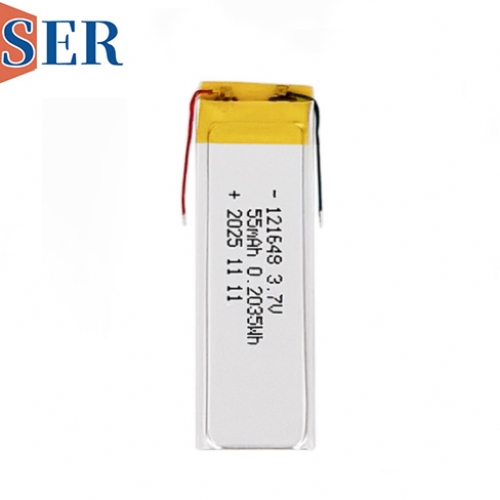
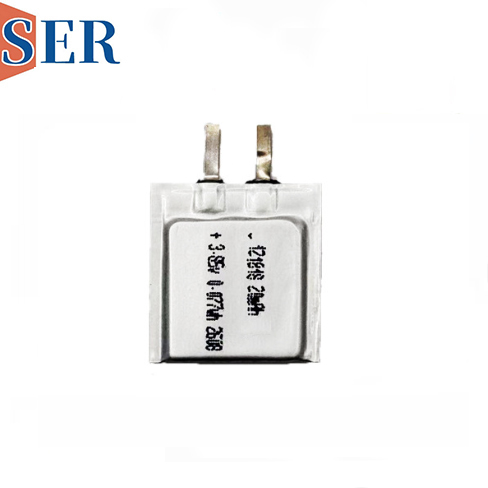
LP121818 Ultra-Thin battery 1.2mm thickness Rechargeable Li-Polymer Battery 3.7V 20mAh
LP121818 Ultra-Thin battery 1.2mm thickness Rechargeable Li-Polymer Battery 3.7V 20mAh
The electronics industry is in the middle of a quiet but relentless squeeze: devices are getting thinner, lighter, and more disposable-looking, yet they are also being asked to do more—wireless communication, sensors, encryption, display feedback, and longer lifetimes. Inside every one of these products, the same engineering bottleneck keeps appearing: the battery. A standard cylindrical 18650 cell simply will not fit inside a 1.2 mm-thick smart card. A coin cell cannot deliver the pulse current a Bluetooth beacon needs. A rigid prismatic pack blocks the curved enclosure designers have spent months perfecting.
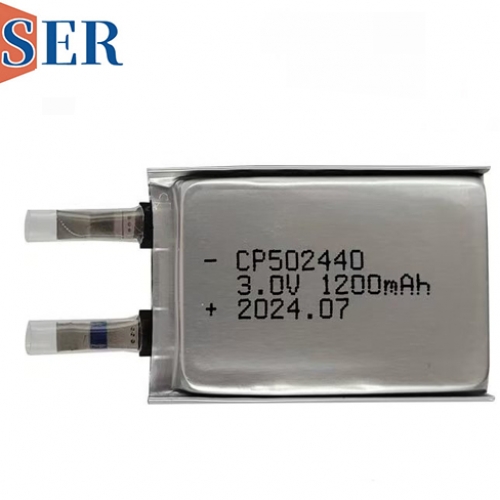
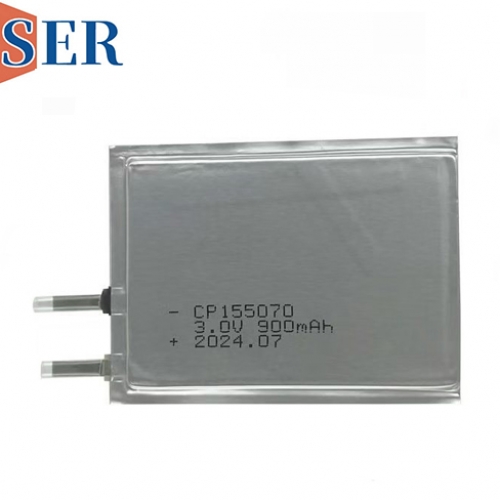
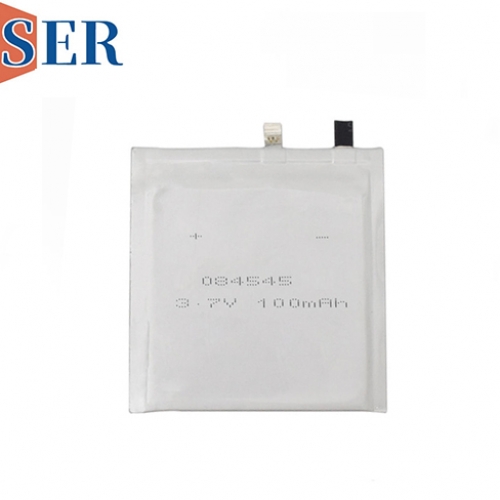
This is where the ultra thin battery and the small Lipo battery come in. Built on lithium polymer pouch construction, these cells are the enablers of the next generation of slim electronics—from contactless smart cards and USB security keys to wearable patches, thin remote controls, and label-shaped IoT trackers. At Guangzhou Serui Battery Technology Co., Ltd. (SERUI Battery, www.serui-battery.com), we design and manufacture this exact category of power cells, including the LP121818—a 1.2 mm-thick, 3.7V, 20mAh rechargeable Li-polymer cell purpose-built for card-shaped and ultra-compact devices.
This guide explains what makes an ultra thin battery genuinely fit for use, where a small Lipo battery outperforms other chemistries, how to specify LP121818 and similar form factors correctly, and why product teams around the world choose SERUI as their pouch-cell partner.
Why Thinner Batteries Are the New Design Bottleneck
It is easy to overlook the battery when a product team is focused on antennas, microcontrollers, sensors, and industrial design. But in practice, the thickness of the pouch inside a smart card, a medical patch, or a Bluetooth tracker is often the single dimension that decides whether the product ships or gets redesigned.
Consider three real constraints:
A smart card must match ISO 7816 dimensions—roughly 0.76 mm thick for a standard PVC card. Adding electronics brings structural thickness, and the battery has to disappear into the remaining budget.
A USB security key (U-shield / eToken) must fit on a keyring and slide into a USB port without bulging. Internally, the PCB, the secure element, and the connector already occupy most of the volume.
A wearable sensor patch must sit flush against skin. Any bump or ridge creates discomfort, delamination, and a negative user experience.
In every case, the cell cannot be a afterthought. It must be designed in from the beginning, and it must be an ultra thin battery—not a rounded coin cell, not a flattened cylinder, but a genuine flexible pouch measured in single millimeters.
The LP121818 that SERUI supplies sits at the extreme end of this design space: 1.2 mm thick, 3.7V nominal, and 20mAh capacity. It is not a high-energy cell. It is, however, exactly the right cell for a device that has almost no space to spare and only needs to power low-duty electronics—a secure element waking once per minute, a BLE beacon advertising once per second, a small E-ink display refreshing on demand.
What Is an Ultra Thin Battery?
2.1 Definition and Construction
An ultra thin battery is a rechargeable or primary lithium polymer cell built on a laminated aluminum-plastic film pouch, with a finished thickness typically between 0.4 mm and 2.5 mm. Below 2 mm, the cell enters the "ultra-slim" category that makes card-shaped and skin-adherent products possible.
Construction differs from a cylindrical or prismatic metal-can cell in several important ways:
Flexible pouch housing. Instead of a rigid steel or aluminum can, the cell is heat-sealed inside an aluminum-plastic laminate film. This film is what allows sub-millimeter profiles and non-rectangular shapes.
Gelled or polymer electrolyte. Instead of a fully liquid electrolyte, ultra thin Li-polymer cells use a gel-polymer or supported electrolyte, which reduces leakage risk and allows thinner coating.
Stacked or wound electrode assembly. At very thin profiles, electrodes are usually stacked rather than wound, because winding a 1.2 mm-wide jelly roll is mechanically difficult and mechanically fragile.
Soft termination. Instead of a metal cap, the cell exits through two aluminum or nickel tabs ultrasonically welded to the pouch.
2.2 The Trade-off: Thickness vs. Capacity
An ultra thin battery is, by definition, an energy-density compromise. Cut a cell from 5 mm to 1.2 mm and you have cut its internal volume—and therefore its capacity—by roughly 75%. The LP121818, for example, delivers only 20mAh, compared with several hundred mAh in a 5 mm-thick pouch of the same footprint.
This means an ultra thin battery is never the right choice for a power-hungry device. It is the right choice when:
Duty cycle is low (the device sleeps most of the time).
Peak current is modest (tens of mA, not several amps).
The enclosure dimension, not runtime, is the binding constraint.
The product can recharge frequently (nightly, between uses, or via a contact pad).
For a BLE beacon advertising every second at a few mA average, 20mAh is enough for days to weeks of runtime between charges. For a smart card that wakes once per minute to validate a transaction, 20mAh is enough for months. Designers who respect this duty-cycle reality get excellent results from an ultra thin battery; designers who try to run a display continuously from a 20mAh cell will be disappointed.
2.3 Why Not a Coin Cell?
Engineers evaluating thin products often ask why they cannot just use a coin cell—CR2032, ML1220, or similar. The honest comparison is useful:
Factor | Ultra thin pouch (e.g. LP121818) | Coin cell (e.g. CR2032) |
Thickness | 1.2 mm and thinner | 1.2 mm (ML1220) to 3.2 mm (CR2032) |
Shape | Customizable, can be notched or rounded | Fixed round can |
Rechargeable | Yes, Li-polymer | Some (ML series), but limited cycle life |
Weight | Lighter, no metal can | Heavier steel can |
Pulse current | Better for BLE pulse loads | Limited, voltage sags under pulse |
Mechanical fit | Conforms to flat cavities | Must have a round pocket |
Risk profile | Pouch vents, no rupture | Can leak or swell |
The coin cell is a mature, cheap, and well-understood option. But it locks the product into a round footprint, a minimum thickness, and a fixed capacity. An ultra thin battery frees the enclosure designer to make the whole device a flat card—a meaningful advantage when the product's brand promise is "thin, invisible, comfortable."
What Is a Small Lipo Battery?
3.1 The Small Lipo Battery Category
A small Lipo battery is simply a lithium-polymer pouch cell in the compact size range—typically under 20 mm in its longest dimension and under 500mAh. This category includes cells like the LP121818 (12 × 18 × 1.2 mm, 20mAh) alongside slightly larger cousins such as 052030, 063048, and 103040 form factors.
"Small Lipo" is not a separate chemistry. It is the same Li-polymer gel system used in larger phone and tablet batteries, built in miniature. The advantages that made Li-polymer dominant in consumer electronics—light weight, flexible shape, low self-discharge, and stable voltage—scale down beautifully into compact devices.
3.2 Where a Small Lipo Battery Wins
Wearables and hearables: true wireless earbud charging cases, smart rings, skin patches.
Bluetooth trackers: thin card-style tags, luggage trackers, asset labels.
Medical and disposable devices: glucose monitor patches, ECG sensors, pill-shaped trackers.
Smart cards and security tokens: contactless payment cards, digital identity cards, USB keys.
Slim remote controls: TV and air-conditioner remotes, presentation clickers, car fobs.
Small drones and RC models: micro quadcopters and indoor flyers.
Gaming peripherals: ultra-slim mouse batteries, wireless earbuds, game controllers.
The LP121818 sits at the very small end of this family: 20mAh is enough for a low-duty card or token, but would not power a micro-drone. SERUI's small Lipo portfolio extends upward from there to cells with several hundred mAh, covering the range between card-shaped and small portable-device power.
3.3 Rechargeable vs. Primary in Small Lipo Form Factor
One subtlety worth flagging: when people say "small Lipo battery" they usually mean a rechargeable Li-polymer cell. But SERUI also builds primary (non-rechargeable) Li-MnO₂ pouch cells in similarly slim form factors for applications where charging is impossible or undesirable—disposable medical patches, single-use IoT labels, and long-life embedded sensors.
For most smart-card, wearable, and tracker products, the rechargeable LP121818-style cell is the right answer because:
It supports hundreds of charge-discharge cycles.
It can be recharged via a simple contact pad or small USB port hidden in the enclosure.
It avoids the disposal and logistics burden of primary cells.
For truly sealed, 5-to-10-year deployments, a primary thin pouch may be the better engineering choice. SERUI engineers will compare both options with you before committing.
LP121818: A Closer Look at the 1.2 mm Card Battery
4.1 Key Specifications
The LP121818 is representative of the ultra thin, small Lipo category that SERUI designs and manufactures:
Model: LP121818
Nominal voltage: 3.7V
Typical capacity: 20mAh
Thickness: 1.2 mm
Width × length: 12 mm × 18 mm
Chemistry: Rechargeable lithium polymer (Li-Po)
Termination: Tinned or nickel tabs, with optional pre-soldered wire leads
Typical applications: smart cards, function cards, USB security keys (U-shield / eTokens), thin wearables, slim beacons
The dimensions follow the industry naming convention: 12 mm thick × 18 mm long × 1.8 mm wide in the shorthand (the digits encode thickness × width × length in millimeters, with decimal points removed). The result is a cell that slips into a card-sized cavity without bulging.
4.2 Real-World Runtime Expectations
Because 20mAh is a small number, runtime expectations need to be set honestly. A useful rule of thumb:
Continuous 1mA load: roughly 15–18 hours of runtime (accounting for efficiency and cut-off voltage).
10mA pulse for 100ms every 5 seconds (BLE advertising): average current around 0.2mA, yielding 80–100 hours between charges.
100µA continuous (secure element polling): up to 200 hours of idle runtime.
These numbers are estimates and depend on the device's actual voltage cut-off, efficiency, and temperature. The point is that an ultra thin battery like LP121818 is matched to low-duty, sleep-heavy electronics—not continuous high-current loads.
4.3 Design-in Tips
SERUI's application engineers commonly share three tips with customers designing in the LP121818 or similar cells:
Leave pressure, not space. Pouch cells must be gently compressed between the enclosure walls. A floating pouch delivers poor cycle life. Design the cavity so the cell is held flat, with 0.1–0.2 mm of compression.
Protect the tabs. The exit tabs on a 1.2 mm cell are the most fragile point. Use strain relief (adhesive Kapton or a molded slot) near the exit, and avoid bending the tabs repeatedly.
Design the charge path early. A rechargeable small Lipo needs a charge IC with appropriate CC/CV profile, a 4.2V cut-off, and over-current protection. We can ship the cell with a small protection PCB attached, matched to your charge voltage and max current.
Manufacturing Ultra Thin and Small Lipo Packs at SERUI
5.1 From Electrode Coating to Sealed Pouch
Building a 1.2 mm pouch is a precision process. The sequence at SERUI includes:
Slurry preparation and electrode coating with tight thickness tolerance on both anode and cathode.
Drying and calendering to densify the electrode and control final cell thickness.
Stacking of anode-separator-cathode layers (rather than winding, for ultra-thin form factors).
Tab ultrasonic welding to the electrode stacks.
Pouch forming and vacuum sealing under controlled dry-room conditions.
Formation charging to stabilize the SEI layer on first charge.
Aging and OCV/IR sorting before final pack assembly.
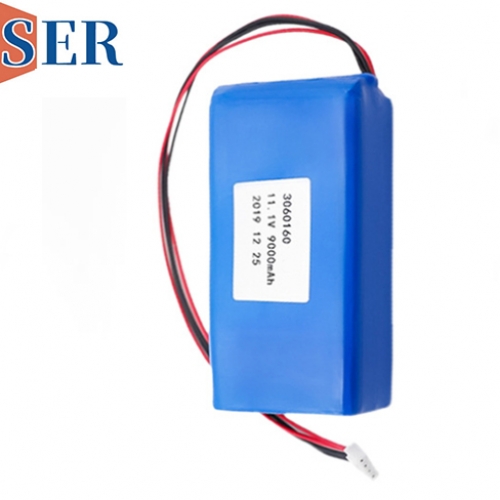
The photographs referenced earlier in this series show the later stages of this process: cylindrical packs in blue shrink-wrap on aging racks, finished assemblies with red-and-black leads and JST connectors, and voltage families from 3.7V to 24V. The LP121818 and its small Lipo siblings run through the same quality gates, just on pouch-format lines.
5.2 Custom Packs Beyond the Bare Cell
Most customers who buy an ultra thin battery do not want just the bare pouch. They want a finished module: the cell, a small protection PCB, wire leads, and a connector that plugs into their motherboard. SERUI offers this as a standard service.
For the LP121818 class of cell, typical custom packs include:
A protection circuit module (PCM) sized for the small cell, offering over-charge, over-discharge, and short-circuit protection.
Tinned or JST-PH 2.0-pitch leads for reliable board connection.
Adhesive backing (3M tape or equivalent) for permanent installation inside a card enclosure.
Custom labels with part number, barcode, date code, and customer logo.
Encapsulation or potting when the card will see vibration, humidity, or thermal cycling.
5.3 Voltage and Capacity Scalability
The LP121818 is a 3.7V single-cell pack. For products that need higher voltage or more capacity, SERUI builds small Lipo packs in series and parallel configurations:
Single cell 3.7V packs up to several hundred mAh, for slim single-board devices.
2S 7.4V small packs for medium-power portable instruments.
3S 11.1V / 12V packs for small handheld tools and portable sensors.
4S 14.8V packs for higher-drain compact equipment.
For ultra thin applications, series configurations quickly become thick, so multi-cell ultra-thin packs are rare. Most card-shaped and token-shaped products stay at single-cell 3.7V.
Quality, Safety, and Certification
6.1 Why Pouch Cells Demand Extra Discipline
A soft pouch looks simple, but it is unforgiving of process shortcuts. Punctures, incomplete seals, and contaminated electrolytes cause the field failures that give Li-polymer a bad name. SERUI treats pouch-cell production as a cleanroom-class operation:
Dry-room control during sealing to avoid moisture uptake.
100% OCV and IR screening after formation.
Leak and seal inspection on every lot.
Thermal and vibration testing on sampled units.
6.2 UN38.3 and Transport Compliance
Every SERUI shipment of an ultra thin battery or small Lipo battery pack is supported by UN38.3 test documentation, covering altitude simulation, thermal cycling, vibration, shock, external short circuit, impact, over-discharge, and forced discharge. This is the baseline that lets our customers in Europe, North America, and Asia clear freight forwarders and customs without delay.
For medical-adjacent and high-reliability programs, additional documentation—CB, CE, RoHS, and tailored customer-audit packages—is available on request.
6.3 Production Scale: From Prototypes to 100K Runs
The LP121818-class cells are well suited to high-volume production. SERUI supports:
Prototype batches from a few dozen units for EVT/DVT testing.
Pilot runs of a few thousand for field trials.
Volume orders of 50K, 100K, and beyond for launched products.
For larger programs, we lock cell lots, stage materials, and reserve production slots so that lead time remains predictable even when raw-material supply tightens. This is why customers in Denmark, South Korea, Ecuador, and the United States return to SERUI for repeat orders—the same engineering rigor that produced their first sample survives into their hundred-thousandth unit.
Ultra Thin Battery vs. Small Lipo Battery: Are They the Same Thing?
Customers sometimes ask whether "ultra thin battery" and "small Lipo battery" are two names for the same product. The answer is no—they overlap, but they describe different design axes.
Ultra thin battery describes a dimension: the cell is under about 2 mm thick. It is a constraint imposed by an enclosure.
Small Lipo battery describes a size category: the cell is compact in all dimensions, usually under a few hundred mAh. It is a constraint imposed by product scale.
A cell can be both (the LP121818 is, at 1.2 mm and 20mAh). A cell can be small but not ultra-thin (a 5 mm-thick 100mAh pouch in a small tracker). A cell can be thin but not especially small in footprint (a 1 mm-thick pouch running the length of a notebook). SERUI engineers both dimensions and will recommend the right form factor based on the customer's actual enclosure drawing.
The practical takeaway: when you send us your mechanical drawing, we do not try to force a catalog part into it. We propose the smallest pouch that meets your runtime and pulse-current needs, and we tune thickness, width, and length to your cavity.
Common Applications in Detail
8.1 Smart Cards and Function Cards
Contactless smart cards—payment cards, access badges, national ID cards, and loyalty cards—are the canonical home of the ultra thin battery. The battery wakes the secure element, drives a small NFC or BLE front-end, and sometimes powers a tiny E-ink or segmented display for one-time passcodes. The LP121818 is a natural fit: it fits inside a card laminate, survives a year or more on a charge, and adds only a fraction of a gram.
8.2 USB Security Keys (U-Shield / eTokens)
Hardware authentication keys protect corporate accounts, cryptocurrency wallets, and online banking. They must be small enough to live on a keyring and tough enough to survive pockets and bags. A small Lipo battery like the LP121818 powers the secure element, the button, and the Bluetooth pairing—recharged every few months over a tiny pogo-pin connector.
8.3 Wearable Medical Patches
Continuous glucose monitors, ECG patches, and temperature sensors adhere to skin. Their battery must be flat, flexible, and light enough not to be noticed. A 1–2 mm pouch is the only form factor that does this without creating a pressure point.
8.4 Slim IoT Beacons and Asset Tags
Bluetooth beacons used for indoor positioning, retail analytics, and asset tracking increasingly ship as credit-card-thin adhesive tags. Their batteries need to last months between charges and survive being mounted on metal, plastic, or cardboard.
8.5 Thin Remote Controls and Stylus Pens
Slim TV remotes, presentation clickers, and active stylus pens all need a small Lipo cell that disappears into a streamlined body. The LP121818 and its slightly larger siblings are commonly specified here.
Frequently Asked Questions
Q: How thin can a rechargeable Li-polymer battery be? A: SERUI routinely builds ultra thin battery cells down to 0.4–1.0 mm in very small footprints, with 1.2 mm (like LP121818) being a popular sweet spot for card-shaped products. Below 1 mm, capacity drops sharply and cycle life becomes more sensitive to design.
Q: How long does a 20mAh small Lipo battery last? A: It depends entirely on the device duty cycle. For a BLE beacon advertising once per second, expect days to a week between charges. For a smart card polling once per minute, expect weeks. We can model your specific current profile and give you an honest runtime estimate.
Q: Can an ultra thin battery be customized to a non-rectangular shape? A: Yes. With tooling, SERUI can produce rounded-corner, notched, or stepped pouches tailored to your enclosure. Tooling cost and lead time depend on the shape and volume.
Q: Is the LP121818 safe to ship by air? A: Yes, when shipped with UN38.3 documentation and within the appropriate lithium-battery packing instructions. We provide the required test summary and packaging guidance with every order.
Q: Do you supply the protection PCB and connector, or just the bare cell? A: We supply both. Most customers choose the finished pack—cell + PCM + leads + connector—so it drops straight onto their motherboard.
Q: What is your minimum order quantity for the LP121818? A: We support prototype quantities from a few dozen units. Volume pricing and tooling terms are discussed on inquiry.
Why Choose SERUI for Your Ultra Thin Battery Program
With pouch-cell suppliers across China, buyers have many choices. Customers return to SERUI for four reasons:
1. We co-design, not just quote. Send us your enclosure drawing and your current-profile estimate, and we will recommend a cell size, a protection scheme, and a connector before you commit. We will also tell you honestly if your runtime target is unrealistic for a 1.2 mm cell.
2. We ship finished packs, not bare cells. The LP121818 arrives with protection circuitry, leads, and—on request—adhesive backing and labels, ready for assembly into your product.
3. We scale with you. Whether you are validating a new wearable in Shenzhen, rolling out a 50K smart-card pilot in Europe, or launching a 100K+ security-key program in North America, the same lines, the same process controls, and the same UN38.3 documentation apply.
4. We communicate in plain commercial English. Our team can discuss a 1C charge profile with your hardware engineer on Tuesday and a payment milestone with your procurement manager on Thursday. We understand that a battery program is a business program as much as a technical one.
Conclusion: Thin Does Not Mean Compromised
The era of "thick, heavy, cylindrical" power is not over—there will always be a place for high-energy 18650 packs and large-format batteries. But the fastest-growing segment of the market is precisely the opposite: cells that disappear into a card, a patch, a key fob, or a tracker.
An ultra thin battery like the LP121818 makes the impossible enclosure possible. A small Lipo battery in the 20–500mAh range powers the quiet devices people now carry without noticing. The engineering work is in the details—thickness tolerance, seal integrity, protection-circuit matching, and honest runtime modeling—and that is exactly where SERUI has built its reputation.
If your next product is flat, small, wearable, or card-shaped, we would like to see your drawing. Send us your mechanical outline, your estimated current profile, and your target runtime, and our engineering team will return a recommended cell, a realistic lead time, and a clear-eyed assessment of any thermal, cycle-life, or pulse-current risks—before you place a purchase order.
Contact SERUI Battery today at www.serui-battery.com to discuss your ultra thin battery or small Lipo battery requirements. Whether your spec is the LP121818 1.2mm 20mAh cell or a custom pouch tailored to your enclosure, we will build it to the same quality standard, ship it with UN38.3 documentation, and stand behind it for the life of your product.
SER GROUP LIMITED / Guangzhou Serui Battery Technology Co., Ltd. — Custom lithium polymer cells and packs for slim, wearable, and card-shaped devices worldwide.