High temperature battery ER18505S 3.6V 3.2Ah: Product Profile at a Glance
High temperature battery ER18505S 3.6V 3.2Ah: Product Profile at a Glance
The ER18505S is a high temperature primary battery built on the lithium-thionyl chloride platform, purpose-designed for environments where ordinary cells cannot survive. Here are the key specifications at a glance:
- Model: ER18505S (high temperature version)
- Chemistry: Lithium-thionyl chloride (Li-SOCl2)
- Nominal voltage: 3.6V
- Nominal capacity: 3.2Ah
- Working temperature range: -40°C to +150°C
- Cell format: Standard 18mm × 50mm cylindrical bobbin construction
- Cell type: Primary (non-rechargeable)
The "ER" prefix identifies the cell as a lithium-thionyl chloride bobbin-type cell, while the suffix "S" denotes the high-temperature variant. The dimensions — roughly 18mm in diameter and 50mm in length — make it a compact, drop-in-ready power source that can be integrated into tight instrument housings without redesigning the whole system.
The working temperature range of -40°C to +150°C deserves special attention. The low end matters almost as much as the high end: equipment deployed in downhole environments often passes through freezing surface conditions before it descends into heat, and a high temperature battery must handle both extremes without performance loss. The 3.2Ah capacity, delivered at a stable 3.6V, provides dependable long-term power for low-current, long-duration loads — precisely the profile of modern sensing, monitoring, and tracking equipment.
High-Temperature Tolerance: Stable Performance Without Thermal Runaway
The primary advantage of the ER18505S high temperature battery lies in its ability to maintain stable performance — and prevent thermal runaway — even at temperatures far exceeding those of conventional batteries. This is not a minor benefit; it is the entire reason this cell exists.
Thermal runaway is the failure mode that most dramatically separates high temperature batteries from ordinary ones. When a conventional cell is exposed to excessive heat, its internal temperature can rise in a self-accelerating cycle: heat triggers chemical reactions, which generate more heat, which triggers further reactions, until the cell vents, ruptures, or catches fire. In a confined downhole tool or a sealed electronics enclosure, such an event is catastrophic — it can destroy the instrument, contaminate the well, and force an expensive recovery operation.
The Li-SOCl2 chemistry, by its nature, is far more resistant to this failure cascade. The ER18505S is built with high-temperature-grade separators, stable electrode materials, and a hermetically sealed construction that maintains internal integrity at 150°C. The result is a high temperature battery that delivers its rated voltage and capacity with minimal degradation, rather than a cell that simply "survives" at high temperatures with dramatically reduced output.
For engineers, this means predictable behavior. The discharge curve of the ER18505S remains flat and stable across its operating range, so the equipment designer can confidently calculate runtime, battery life, and end-of-life voltage thresholds. In applications where a battery failure is not an option, this predictability is invaluable.
Longevity: Extended Battery Life and Reduced Maintenance
Longevity is the second pillar of the high temperature battery value proposition, and the ER18505S 3.6V 3.2Ah delivers it in spades. The advanced chemistry and robust design of the LiSOCl2 battery translate directly into extended battery life and reduced maintenance requirements.
In the field, this shows up in several concrete ways. First, the low self-discharge rate means that energy stays in the cell rather than leaking away over time. A battery that loses only a fraction of a percent of its capacity per year can sit on a shelf for years and still be ready for service when it is finally installed. Second, the flat discharge profile means that the usable capacity is genuinely available throughout the cell's life, rather than being compromised by premature voltage decay. Third, the high-temperature design keeps internal degradation in check even when the cell is continuously exposed to extreme heat.
The maintenance implications are significant. Consider a wireless sensor network deployed along a pipeline or inside an industrial process. If each sensor requires battery replacement every few months, the total cost of ownership — labor, logistics, downtime, and risk — quickly dwarfs the cost of the batteries themselves. A high temperature primary battery with a multi-year service life changes the economics entirely: install once, monitor for years, and replace only at scheduled intervals.
The same logic applies to downhole oil and gas operations. A drilling tool that must be retrieved and re-powered frequently loses money with every trip. A battery that reliably powers the tool for its entire planned service life eliminates a whole category of unplanned interventions. When failure and retrieval are measured in millions of dollars, the value of a high temperature battery that simply lasts is impossible to overstate.
Reliability: Performance When Failure Is Not an Option
In critical applications where failure is not an option, the LiSOCL2 battery ER18505S 3.6V 3.2Ah LiSOCl2 battery offers unparalleled reliability and consistency. This is a claim that the cell earns through both chemistry and construction.
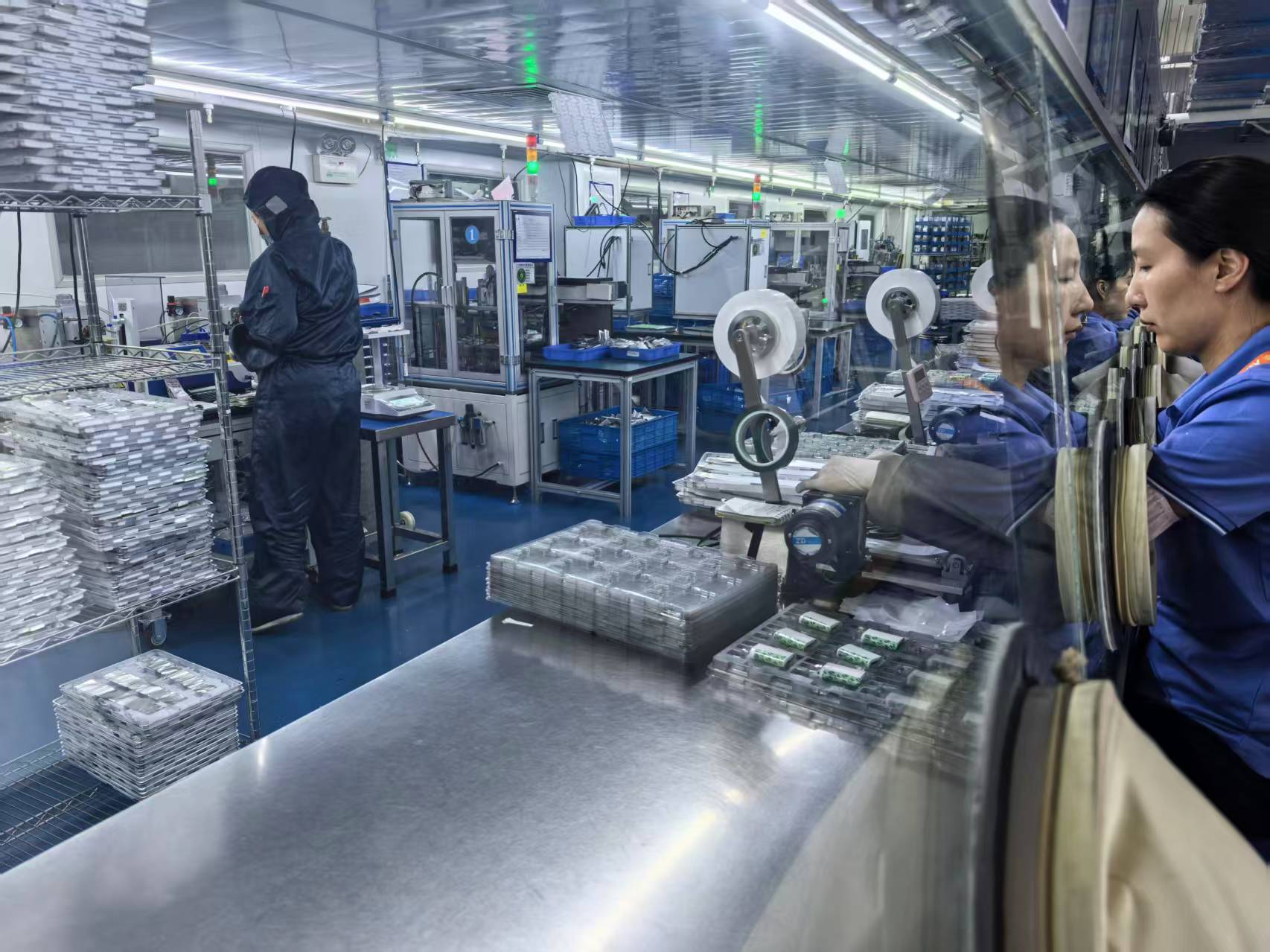
Every stage of the manufacturing process matters. A high temperature battery destined for downhole service is produced under strict quality control, with tight tolerances on materials, electrode fabrication, electrolyte filling, and sealing. The hermetically sealed construction protects the internal chemistry from moisture and contamination — the two enemies of long-term battery stability. The result is cell-to-cell consistency that lets system designers trust their calculations.
Reliability also means voltage stability under load. Many high temperature applications draw current in pulses — a sensor that wakes, measures, transmits, and sleeps — and the ER18505S handles these duty cycles with a stable, predictable voltage response. For low-current continuous loads, such as memory backup or real-time clocks, the cell's low self-discharge and stable voltage provide years of uninterrupted service.
In the oil and gas industry, where MWD (Measurement While Drilling) and LWD (Logging While Drilling) tools operate in conditions of extreme heat, vibration, and shock, reliability is the difference between a successful run and a failed well. The ER18505S has earned its place in these systems because it performs, consistently, run after run.