The Lithium Battery Revolution in the AI Era: Why Lipo Battery, Ultra Thin Battery and High Temperature Battery Are Powering the Future of Smart Devices
The Lithium Battery Revolution in the AI Era: Why Lipo Battery, Ultra Thin Battery and High Temperature Battery Are Powering the Future of Smart Devices
Introduction
We are living in the age of artificial intelligence. From voice assistants that respond before we finish our sentences to smart meters that read themselves, from wearable health monitors that track every heartbeat to robots that navigate warehouses without a map, intelligent devices have quietly woven themselves into nearly every corner of modern life. According to industry estimates, the global market for AI-powered smart devices has expanded at a double-digit pace every year since the technology went mainstream, and the appetite for smarter, smaller, more connected products shows no sign of slowing.
But behind every intelligent device, behind every sensor, every actuator and every wireless transmission, there is one silent enabler: the lithium battery. Lithium batteries are the lifeblood of the smart device economy. As AI pushes devices to become more powerful, more compact and more self-sufficient, the demands placed on their power sources are growing at the same speed. And within the broad lithium battery family, three product categories have emerged as the fastest-growing stars of the intelligent era — the rechargeable Lipo battery, the ultra thin battery designed for wearables, and the high temperature battery engineered for harsh industrial environments.
This article explores why these three battery technologies are rising in parallel with AI, how each one solves a specific power challenge of the smart age, and what buyers should look for when sourcing them from a reliable battery manufacturer.
The AI-Driven Demand Surge for Advanced Lithium Batteries
The connection between artificial intelligence and battery technology is far deeper than most people realize. AI does not simply create devices that need more power — it fundamentally changes how and where those devices operate, and therefore what kind of battery they need.
First, AI devices are becoming more pervasive. The Internet of Things (IoT) has moved from a buzzword to the backbone of industrial monitoring, smart agriculture, smart city infrastructure and connected logistics. Every wireless gateway, every smart gas or water meter, every remote sensor needs a power source that can last for years without maintenance.
Second, AI devices are becoming more personal. Smart wearables — earbuds, smartwatches, smart rings, medical patches, AR glasses — now pack more computing power than a desktop computer had a decade ago. Consumers expect them to be light, thin, discreet and long-lasting, which pushes battery designers toward extreme miniaturization without sacrificing capacity.
Third, AI devices are moving into harsher environments. Edge computing is bringing intelligence to oil fields, downhole drilling tools, engine compartments, industrial furnaces and desert solar farms. In these settings, standard consumer batteries fail quickly, and only batteries engineered for high temperature operation can deliver the reliability that industrial customers demand.
This triple trend — more devices, thinner devices, tougher environments — explains exactly why the Lipo battery, the ultra thin battery and the high temperature battery are now the three most sought-after power solutions in the lithium battery market. Each answers a distinct question: how to pack more energy into a small space, how to fit power into the slimmest possible form, and how to keep delivering power when the temperature rises.
Lipo Battery: The Versatile Powerhouse for Modern Smart Devices
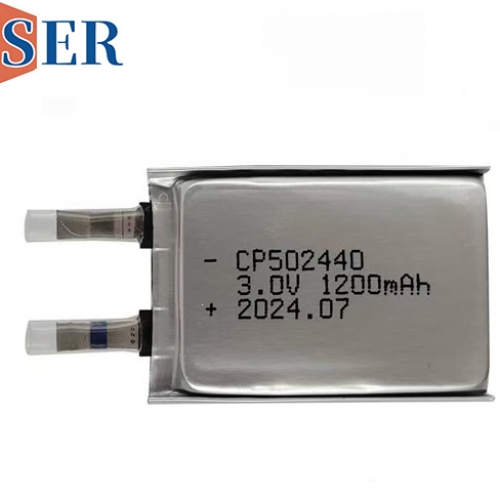
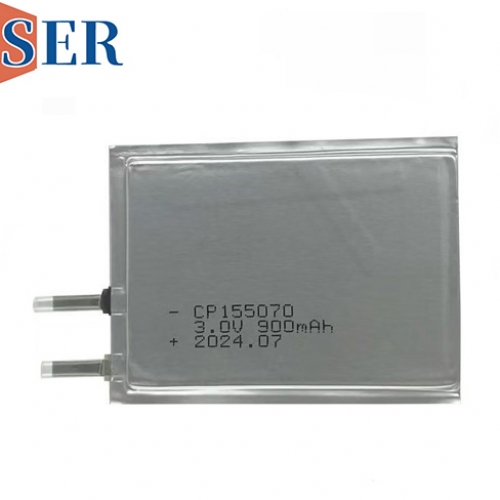
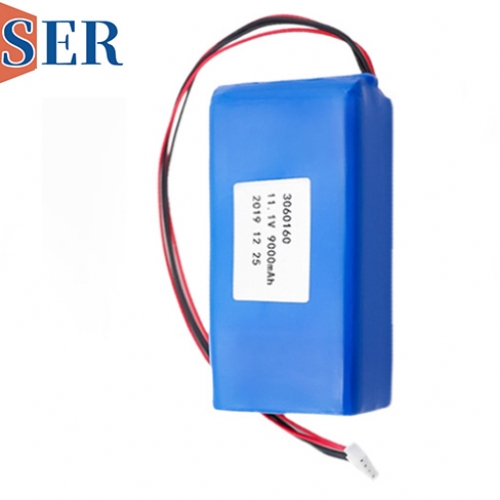
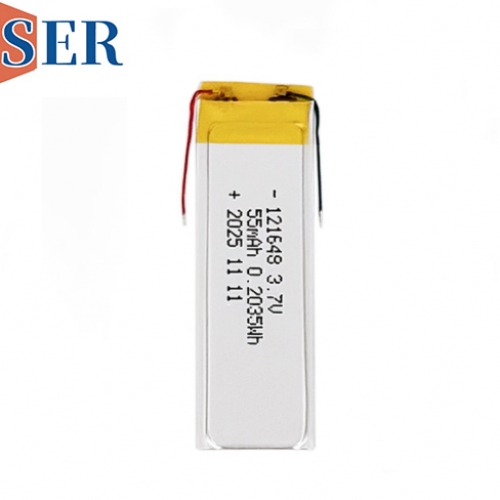
Among all rechargeable lithium chemistries, the Lipo battery (lithium polymer battery) has become the default choice for product designers who need a perfect balance of energy density, weight, safety and flexibility. Unlike traditional cylindrical or prismatic cells with rigid metal casings, a Lipo battery uses a soft aluminum-polymer pouch, which allows manufacturers to shape the cell to fit almost any product design.
Why is the Lipo battery so dominant in the AI era? The reasons are practical and measurable.
High energy density. A quality Lipo battery delivers 150–250 Wh/kg, allowing compact devices to run for hours on a single charge. For drones, robotics and portable electronics — all of which are multiplying rapidly under the influence of AI — this energy density is the difference between a product that is genuinely useful and one that constantly needs recharging.
Design freedom. Because the pouch can be shaped, a Lipo battery can be manufactured in custom dimensions: curved, thin, long, square, or punched with holes for screws. For AI hardware developers iterating quickly on prototypes, this customization is a major advantage. Most reputable manufacturers offer custom Lipo battery solutions with tailored capacity, voltage, connector type and protection circuit.
Safety and reliability. Modern Lipo batteries are built with multi-layer protection, including overcharge, over-discharge, over-current and short-circuit protection circuits. When sourced from a certified manufacturer, they are as safe as any consumer power source on the market, and they pass strict international standards such as UN38.3, IEC 62133 and CE/RoHS compliance.
Fast charging and stable discharge. AI devices are heavy consumers of power during bursts of activity — think of a drone taking off, a robot arm moving at full speed, or a smart speaker processing a voice command. A well-designed Lipo battery supports high discharge C-rates and rapid charging, ensuring that devices respond instantly without voltage sag.
Typical applications of the Lipo battery in the intelligent era include consumer drones, robotics, smart home hubs, portable medical devices, power tools, e-mobility products and countless custom IoT devices. For OEM and ODM customers, partnering with a manufacturer that offers complete Lipo battery customization — from cell selection to PCM integration to final assembly — shortens development cycles and de-risks the supply chain.
Ultra Thin Battery: The Enabler of Next-Generation Wearables
If the Lipo battery is the workhorse of the smart device economy, the ultra thin battery is its designer jewel. The wearable revolution — smartwatches, TWS earbuds, smart rings, smart glasses, skin patches, smart labels and medical monitoring devices — has one overwhelming requirement: the battery must be extremely thin, yet still hold enough energy to power sensors and wireless communication all day.
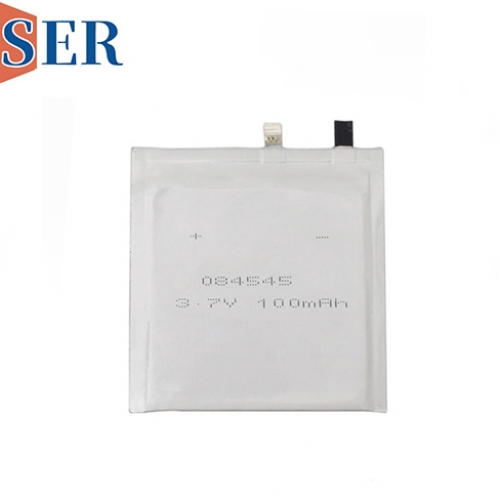
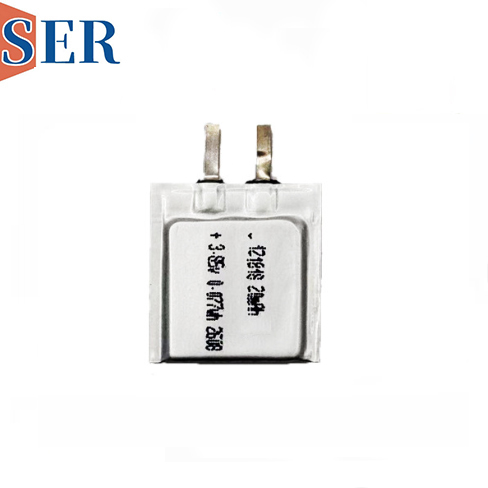
An ultra thin battery is a lithium polymer cell engineered to minimize thickness while maintaining usable capacity. Leading manufacturers now produce ultra thin batteries as thin as 0.4 mm to 1.0 mm, with custom capacities ranging from a few milliamp-hours for earbuds to several hundred milliamp-hours for smartwatch and medical patch applications. At these dimensions, the battery becomes almost invisible inside the product envelope — exactly what industrial designers want.
Why are ultra thin batteries indispensable for the AI-driven wearable market?
Comfort drives adoption. Wearables only succeed when users forget they are wearing them. A bulky battery is the fastest way to make a beautiful product uncomfortable. Ultra thin batteries allow brands to create sleeker profiles, lighter weights and better ergonomics, which directly translate into higher user retention.
Continuous sensing demands power. Modern wearables monitor heart rate, blood oxygen, sleep quality, location and motion around the clock. This continuous sensing, combined with AI algorithms running on-device, creates a constant power draw. The ultra thin battery must therefore balance thinness with genuinely usable capacity — a benchmark that separates expert manufacturers from commodity cell suppliers.
Form factor innovation. From curved batteries that wrap around watch cases to flexible batteries that bend with smart textiles, the ultra thin battery category is expanding into entirely new form factors. Custom ultra thin battery development — including flexible printed circuit (FPC) output, custom shapes and adhesive backing — is now a standard service offered by advanced battery factories.
Reliability in daily life. An ultra thin battery is expected to survive hundreds of charge cycles, temperature changes between summer heat and winter cold, and the physical stress of daily wear. Certified ultra thin batteries undergo rigorous cycle life and safety testing, including UN38.3 transport certification and IEC 62133 safety certification, ensuring they are not only thin but also dependable.
For companies building the next generation of wearable devices, the choice of an ultra thin battery supplier is a strategic decision. The right partner brings more than cells; they bring custom design support, prototyping speed and a proven record of mass production quality.
High Temperature Battery: Reliability in Extreme Environments
While consumer devices enjoy climate-controlled environments, a rapidly growing share of AI-enabled equipment operates where heat is constant, intense and unforgiving. Downhole drilling instruments, oil and gas monitoring sensors, engine compartments, industrial automation, solar power systems, mining equipment and automotive electronics all push batteries to their thermal limits. This is where the high temperature battery becomes the only viable power solution.
A high temperature battery is a lithium battery specifically engineered to operate, charge and deliver reliable performance at elevated temperatures where standard lithium batteries would degrade, swell or fail. Depending on chemistry and construction, high temperature batteries can work reliably in ranges such as -40 °C to +85 °C, with specialized grades extending to +125 °C or higher for brief exposures.
Why does high temperature performance matter so much in the AI era?
Industrial IoT is moving underground and into the heat. Oil well monitoring, geothermal sensing, downhole logging tools and pipeline inspection systems deploy sensors that must transmit data for months without maintenance. These tools routinely experience temperatures of +60 °C to +125 °C. Only a purpose-built high temperature battery can power them safely and consistently.
Heat is the number-one battery killer. Every 10 °C increase in operating temperature roughly accelerates battery aging and can dramatically shorten service life. In an engine bay or a desert control cabinet, a standard battery may last months; a certified high temperature battery lasts years. For industrial customers, the total cost of ownership calculation is decisive.
Safety in extreme conditions. High temperature environments amplify the risks of thermal runaway, swelling and leakage. A genuine high temperature battery uses thermally stable materials, reinforced sealing and dedicated safety valves, and it is validated through high-temperature cycling and abuse tests. Products that pass UN38.3, IEC 62133 and customer-specific thermal requirements provide the confidence that mission-critical applications demand.
Long standby, long life. High temperature batteries are frequently paired with low-power IoT radios, combining ultra-low self-discharge with high temperature resilience. The result is a maintenance-free power solution that can sit inside a hot enclosure for years, waking only when a sensor reading needs to be transmitted.
For original equipment manufacturers serving the energy, automotive and industrial sectors, a trusted high temperature battery supplier should provide documented temperature performance curves, full certification packages, and custom engineering support to match the battery to the exact thermal profile of the application.
How to Choose the Right Battery for Your Application
With the three categories clearly defined, how should a buyer decide which lithium battery fits a specific project? A disciplined selection process reduces cost, avoids field failures and speeds time to market.
1. Define the operating environment first. Ask: what is the maximum and minimum temperature the device will experience? Will the battery be stored long-term? If temperatures regularly exceed +60 °C, a high temperature battery is mandatory. If the product must survive sub-zero winters, verify the low-temperature discharge performance as well.
2. Match capacity and voltage to the power budget. Calculate the average and peak power draw of the device, then size the battery with a safety margin. For a Lipo battery, specify nominal voltage (typically 3.7 V per cell), capacity in mAh, and maximum continuous discharge current. For wearables, define the thickness constraint first — this determines whether an ultra thin battery is required and what capacity is realistically achievable.
3. Prioritize size and form factor early. Industrial designers should engage the battery manufacturer during the concept phase, not after the enclosure is finished. Custom Lipo battery and ultra thin battery tooling is most cost-effective when the product design can accommodate the cell's natural dimensions.
4. Demand complete certifications. A professional battery supplier provides UN38.3 test reports, IEC 62133 certificates, MSDS documentation and transport certificates as standard. For high temperature applications, request the manufacturer's thermal test data and temperature derating curves. Certificates are not paperwork — they are proof of engineering discipline.
5. Verify the supply chain. In a market where counterfeit cells are still common, sourcing directly from a certified factory — or from a trading partner with documented factory traceability — protects both product quality and brand reputation.
Quality, Safety and Certification: Non-Negotiable in Battery Supply
The lithium battery is one of the most safety-critical components in any product. Poor-quality cells fail in the field, damage devices, harm users and destroy brands. That is why professional buyers evaluate battery manufacturers on quality systems, not just price.
Leading manufacturers implement full in-house quality control across the entire chain: cell formulation, electrode coating, winding, pouch sealing, protection circuit assembly, aging and grading, and final battery pack assembly. Each step is documented and traceable. International certifications — UN38.3 for transport safety, IEC 62133 for cell and battery safety, CE marking, RoHS and REACH compliance — should be standard deliverables, with test reports available for customer review.
For custom projects, a capable manufacturer also provides engineering support: battery pack design, connector selection, protection circuit configuration, mechanical drawings, sample testing and production validation. The ability to move from specification to certified sample to mass production quickly is the single most important capability when launching AI-era smart products under tight deadlines.
Partnering with a Battery Manufacturer That Keeps Pace with the AI Era
The smart device industry is moving faster than ever, and battery supply chains must move with it. The ideal lithium battery partner combines three things: a broad product portfolio covering Lipo battery, ultra thin battery and high temperature battery solutions; deep customization capability across capacity, voltage, size and connector; and a quality system certified to international standards.
SER GROUP LIMITED / Guangzhou Serui Battery Technology Co., Ltd. is one such manufacturer. With a product line spanning rechargeable lithium polymer batteries, ultra-thin wearable batteries, high-temperature lithium batteries, and specialty chemistries including lithium thionyl chloride and lithium manganese dioxide cells, the company serves customers across consumer electronics, wearable devices, IoT infrastructure, oil and gas instrumentation, security equipment and industrial automation. Every solution is supported by documentation — technical datasheets, certificates of conformity, MSDS and test reports — so that global buyers can integrate SER batteries with confidence.
By working with a single partner that covers the full spectrum of intelligent-era battery needs, buyers simplify qualification, consolidate orders and build a supply chain that can scale as AI continues to expand the boundaries of what smart devices can do.
Conclusion
Artificial intelligence has transformed the way we live, work and build products — and every intelligent device, from a smartwatch on a wrist to a sensor a kilometer underground, depends on the humble lithium battery. As the smart device ecosystem grows, three battery categories are rising faster than the rest: the flexible, high-energy Lipo battery powering drones, robots and portable electronics; the wafer-thin ultra thin battery enabling comfortable, always-on wearables; and the rugged high temperature battery keeping industrial IoT alive in heat that would destroy ordinary cells.
Choosing the right battery technology — and the right manufacturing partner — is no longer a procurement detail. It is a competitive advantage. Whether you are designing the next wearable hit, a smart industrial sensor or an autonomous robot, the battery you choose will determine how far your product can go.
If you are evaluating battery solutions for a new project, talk to a manufacturer that understands the intelligent era. Ask about custom Lipo battery development, ultra thin battery thickness limits and high temperature battery performance data. The right answer may be the difference between a product that merely works and a product that leads its market.