The Rising Popularity of Ultra-Thin LiMNO2 Battery for Non-Rechargeable Thin Film Lithium Solution
The Rising Popularity of Ultra-Thin LiMNO2 Battery for Non-Rechargeable Thin Film Lithium Solution
In the rapidly evolving landscape of portable electronics, wearable technology, and miniature IoT devices, the demand for compact, lightweight, and high-reliability power sources has reached an unprecedented height. When consumers and industry professionals mention ultra thin battery technology, the first product that comes to mind is almost always the rechargeable thin Lipo battery, which has dominated the thin battery market for years due to its recyclable charging capability and flexible form factor. However, a new category of thin power solutions is emerging rapidly and gaining massive market traction: the non-rechargeable LiMNO2 battery, also known as lithium manganese dioxide ultra-thin primary battery. Breaking the inherent limitations of rechargeable thin lithium batteries, the ultra-thin LiMNO2 battery delivers unparalleled advantages in safety, stability, shelf life, and cost-efficiency, making it an increasingly preferred choice for low-power, long-service-life, and ultra-compact electronic applications.
Traditional thin battery markets have long been saturated by rechargeable lithium polymer batteries. While these rechargeable ultra-thin cells excel in reusable scenarios such as smart wearables, portable power banks, and foldable consumer electronics, they have irreparable drawbacks in specific industrial and commercial scenarios. Frequent charging cycles lead to capacity attenuation, aging deformation, and potential safety risks including swelling and short circuits. Moreover, rechargeable thin Lipo batteries require matching charging circuits and protection modules, which occupy extra internal space and increase the overall weight and production cost of miniaturized devices. In contrast, the non-rechargeable ultra thin LiMNO2 battery abandons the redundant charging structure, adopts a streamlined thin-film pouch design, and focuses on core power supply performance, perfectly fitting the development trend of ultra-thin, miniaturized, and integrated modern electronic equipment.
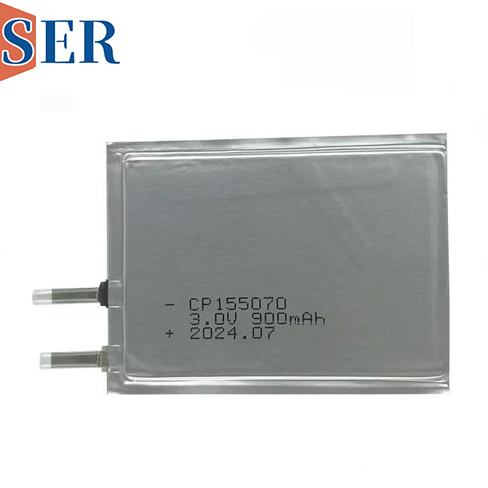
The LiMNO2 battery is a professional compact primary lithium battery with a fixed nominal voltage of 3.0V, which precisely matches the operating voltage of most low-power electronic chips, sensors, and miniature circuit modules. As a mature ultra-thin battery technology, it features a flexible pouch cell structure, ultra-low self-discharge rate, stable discharge platform, and excellent environmental adaptability. Unlike cylindrical and square lithium batteries with fixed bulky sizes, the ultra-thin LiMNO2 battery supports ultra-thin customization, with the thinnest model reaching only 0.4mm, which is far thinner than traditional thin battery products. This ultra-thin design thoroughly solves the space bottleneck of micro-devices and enables the innovative design of ultra-thin electronic products that were previously restricted by power volume.
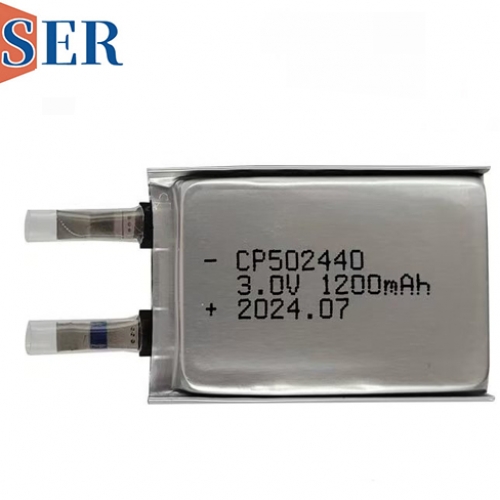
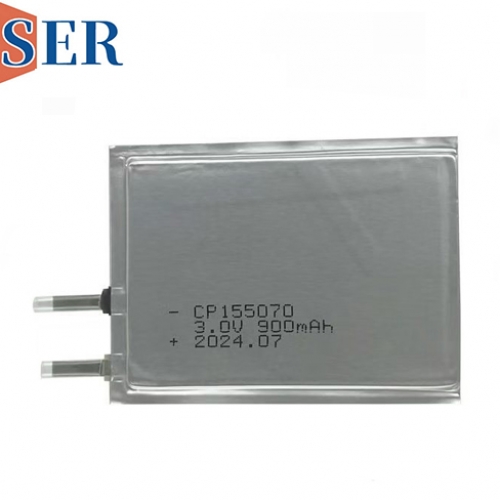
To better understand the product advantages and practical application value of this ultra thin battery, it is necessary to analyze two classic mainstream models in the current market: the Disposable Flat Limno2 Battery 1200mAh 3.0V CP502540 Thin Film Lithium Battery and the Ultra-Thin 3V 1200mAh LiMnO2 Pouch Cell Non-Rechargeable Primary Battery Model CP224248. These two representative LiMNO2 battery products fully demonstrate the core performance characteristics of ultra-thin primary lithium batteries and cover the mainstream size and capacity requirements of industrial and civilian ultra-thin power supply scenarios.
The CP502540 model is a flat ultra-thin LiMNO2 battery with a capacity of 1200mAh and a standard voltage of 3.0V. Adopting advanced thin-film lithium manganese dioxide molding technology, it features a flat and regular appearance, no bulging deformation, and extremely high space utilization. Compared with traditional rechargeable thin batteries of the same capacity, this LiMNO2 battery has a more compact overall structure and a thinner body, saving nearly 40% of internal equipment space. Its internal electrode structure is optimized through precision lamination technology, ensuring an extremely flat discharge voltage curve throughout the entire power supply cycle. The voltage remains stable at around 3.0V during long-term low-current discharge, without obvious voltage drop or fluctuation, which effectively avoids equipment failure, data loss, and abnormal operation caused by unstable power supply. As a disposable compact ultra-thin battery, it requires no charging management system, simplifying the circuit design of terminal equipment and reducing product failure rates.
Another star product, the CP224248 ultra-thin 3V 1200mAh LiMNO2 pouch cell, further upgrades the ultra-thin structural design on the basis of maintaining consistent core voltage and capacity parameters. This flexible pouch-type ultra thin battery adopts a high-toughness polymer composite shell, which is resistant to extrusion, bending, and low-temperature aging. Different from rigid battery cells, its flexible form factor adapts to irregular installation spaces of special-shaped ultra-thin equipment, greatly expanding the application boundary of ultra-thin power supplies. The advanced LiMNO2 chemical system endows this battery with ultra-low self-discharge performance, with an annual self-discharge rate of less than 1%, supporting up to 10 years of long-term shelf storage. This feature is completely unmatched by ordinary rechargeable thin Lipo batteries, which have obvious capacity attenuation after long-term standby.
The core competitiveness of the ultra thin LiMNO2 battery lies in its unique lithium manganese dioxide chemical system and ultra-thin film packaging process, which bring comprehensive advantages in safety, stability, and durability. In terms of safety performance, rechargeable thin lithium batteries are prone to thermal runaway, swelling, and even combustion risks during charging and discharging cycles, especially in ultra-thin designs where the internal diaphragm is thinner and more vulnerable to damage. In contrast, the non-rechargeable LiMNO2 battery has a highly stable chemical reaction system. It does not involve complex lithium ion embedding and de-embedding cycles, has no overcharge and over-discharge risks, and will not swell or generate heat during normal use. It has passed UL safety certification and EU environmental protection directives, with excellent explosion-proof, pressure-resistant, and high-low temperature resistance, adapting to complex and harsh working environments.
In terms of environmental adaptability, the ultra thin LiMNO2 battery has a wide operating temperature range of -20℃ to +70℃, which can maintain stable discharge performance in low-temperature cold environments and high-temperature closed spaces. This enables it to work normally in outdoor IoT monitoring equipment, medical wearable devices, and industrial sensing equipment that require all-weather operation. Traditional rechargeable thin batteries often suffer from sharp capacity decline in low-temperature environments and accelerated aging in high-temperature environments, which cannot meet the long-term stable operation requirements of industrial-grade equipment. In addition, the LiMNO2 battery has high energy density, reaching 280-350 Wh/kg. It can maintain sufficient power reserve in an ultra-thin and lightweight volume, balancing ultra-thin size and long battery life perfectly.
Cost performance is another key factor driving the rapid popularity of ultra thin LiMNO2 battery. Rechargeable ultra-thin Lipo batteries need to be equipped with professional protection circuits, charging management chips, and heat dissipation structures, which greatly increase the overall design and manufacturing cost of equipment. For low-power devices that do not need frequent power replacement and require long-term standby operation, the repeated charging function of rechargeable thin batteries is redundant, and the additional charging module instead causes resource waste and increased failure risks. The non-rechargeable LiMNO2 battery adopts an integrated streamlined design with no auxiliary charging components required. It has a simple installation process, low comprehensive application cost, and extremely low later maintenance cost. For mass-produced miniature electronic products, it can effectively reduce production costs and improve product market competitiveness.
With the continuous upgrading of miniaturized electronic technology, the application scenarios of ultra thin LiMNO2 battery are becoming increasingly extensive, covering consumer electronics, intelligent Internet of Things, medical equipment, security monitoring, industrial sensing, and many other fields. In the field of smart wearable devices, ultra-thin medical monitoring patches, smart wristbands, and body temperature detection sensors require ultra-thin and lightweight power sources to fit human skin and improve wearing comfort. The 0.4mm ultra-thin LiMNO2 battery perfectly meets the fitting and lightweight requirements of wearable medical devices, and its long-life stable discharge ensures continuous and accurate monitoring of physiological data.
In the IoT intelligent sensing industry, electronic price tags, RFID identification tags, asset tracking tags, and intelligent logistics monitoring equipment all rely on long-standby, low-power, ultra-thin power supplies. Traditional button batteries and cylindrical batteries are too bulky to adapt to ultra-thin tag design, while rechargeable thin batteries cannot achieve long-term maintenance-free operation due to self-discharge problems. The ultra thin LiMNO2 battery with 10-year super-long shelf life and ultra-low self-discharge rate becomes the optimal power supply solution for IoT ultra-thin terminal equipment, realizing long-term uninterrupted operation of intelligent tags and reducing manual replacement and maintenance costs.
In the fields of security and industrial equipment, ultra-thin anti-theft tracking devices, electronic recording equipment, and precision industrial sensors have strict requirements on power supply stability and volume. The 3.0V stable voltage output of the LiMNO2 battery can perfectly match the working voltage of precision electronic components, avoiding equipment data errors and operational abnormalities caused by voltage fluctuations. Its high safety and anti-aging performance ensure stable operation of industrial equipment in harsh environments for a long time, greatly improving equipment reliability and service life.
It is worth emphasizing that the market positioning of ultra thin LiMNO2 battery and traditional rechargeable thin Lipo battery is complementary rather than competitive. Rechargeable ultra-thin batteries are still irreplaceable in scenarios requiring repeated charging and high-frequency use, such as smart phones, tablet computers, and foldable wearable devices. However, in long-term standby, low-power, ultra-thin miniaturized, and maintenance-free application scenarios, the non-rechargeable LiMNO2 battery shows overwhelming advantages. With the continuous refinement of electronic product design and the explosive growth of ultra-miniature IoT devices, the market demand for professional ultra-thin primary batteries is increasing year by year, making LiMNO2 battery one of the fastest-growing segments in the thin battery industry.
In terms of technological iteration, the ultra thin LiMNO2 battery industry is also constantly innovating and upgrading. Manufacturers continue to optimize the lithium manganese dioxide formula and thin-film packaging process, further reducing battery thickness, improving energy density, and enhancing flexible bending resistance. Customized size services have become mature, which can meet the personalized ultra-thin power supply needs of different special-shaped equipment. At the same time, with the improvement of environmental protection standards in the global electronics industry, the LiMNO2 battery adopts environmentally friendly and non-toxic raw materials, which complies with international environmental protection regulations and has a higher environmental protection level than many traditional rechargeable batteries, conforming to the sustainable development trend of the industry.
In conclusion, the ultra thin LiMNO2 battery has broken the market monopoly of rechargeable thin Lipo batteries in the ultra-thin power supply field with its ultra-thin lightweight design, 3.0V stable voltage output, ultra-low self-discharge rate, long shelf life, high safety, and low comprehensive cost. As a mature and reliable non-rechargeable thin film lithium battery solution, models such as CP502540 and CP224248 have verified its excellent performance in practical industrial and civilian applications. With the continuous development of miniaturized, ultra-thin, and intelligent electronic equipment, the LiMNO2 battery will surely gain more extensive market applications and become a core power source for ultra-thin low-power electronic devices, leading the new development trend of the global ultra-thin battery industry.